Filter By:

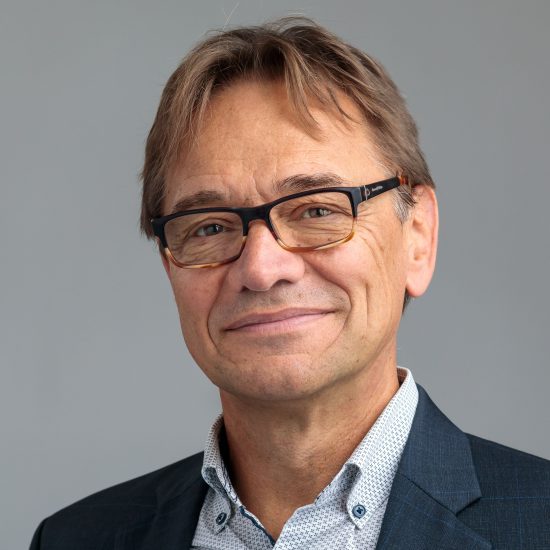
Steven Durlauf

Frank P. Hixon Distinguished Service Professor
University of Chicago Harris School of Public Policy

Steven Neil Durlauf is the Frank P. Hixon Distinguished Service Professor and the Director of the Stone Center for Research on Wealth Inequality and Mobility at the University of Chicago Harris School of Public Policy. Prior to this appointment, he was William F. Vilas Research Professor and Kenneth J. Arrow Professor of Economics at the University of Wisconsin-Madison.

Durlauf received a BA in economics from Harvard in 1980, where he was elected to Phi Beta Kappa, and a Ph.D. in economics from Yale in 1986. He is a Fellow of the Econometric Society, a Fellow of the Society for the Advancement of Economic Theory, a Fellow of the International Association of Applied Econometrics, and a Research Associate of the National Bureau of Economic Research. He was elected to the American Academy of Arts and Sciences in 2011.

Durlauf was Co-Director of the Human Capital and Economic Opportunity Working Group from 2010 to 2022, an international research network linking scholars across disciplines in the study of inequality and the sources of human flourishing and destitution. Additionally, Durlauf served as Economics Program Director of the Santa Fe institute from 1996-1998.

Durlauf is currently a General Editor of the Elsevier Handbooks in Economics series. He was a General Editor of The New Palgrave Dictionary of Economics, revised edition, published in 2008, the most extensive compendium of economic knowledge in the world. He was also the Editor of the Journal of Economic Literature from 2013 to 2022.

Durlauf’s research spans many topics in economics. His most important substantive contributions involve the areas of poverty, inequality and economic growth. Much of his research has attempted to integrate sociological ideas into economic analysis. His major methodological contributions include both economic theory and econometrics. He helped pioneer the application of statistical mechanics techniques to the modelling of socioeconomic behavior and has also developed identification analyses for the empirical analogs of these models. Other research has focused on techniques for policy evaluation and the econometrics of cross-country income differences. Durlauf is also known as a critic of the use of the concept of social capital by social scientists and has also challenged the ways that agent-based modelling and complexity theory have been employed by social and natural scientists to study socioeconomic phenomena.
Steven Durlauf

Frank P. Hixon Distinguished Service Professor
University of Chicago Harris School of Public Policy

Steven Neil Durlauf is the Frank P. Hixon Distinguished Service Professor and the Director of the Stone Center for Research on Wealth Inequality and Mobility at the University of Chicago Harris School of Public Policy. Prior to this appointment, he was William F. Vilas Research Professor and Kenneth J. Arrow Professor of Economics at the University of Wisconsin-Madison.

Durlauf received a BA in economics from Harvard in 1980, where he was elected to Phi Beta Kappa, and a Ph.D. in economics from Yale in 1986. He is a Fellow of the Econometric Society, a Fellow of the Society for the Advancement of Economic Theory, a Fellow of the International Association of Applied Econometrics, and a Research Associate of the National Bureau of Economic Research. He was elected to the American Academy of Arts and Sciences in 2011.

Durlauf was Co-Director of the Human Capital and Economic Opportunity Working Group from 2010 to 2022, an international research network linking scholars across disciplines in the study of inequality and the sources of human flourishing and destitution. Additionally, Durlauf served as Economics Program Director of the Santa Fe institute from 1996-1998.

Durlauf is currently a General Editor of the Elsevier Handbooks in Economics series. He was a General Editor of The New Palgrave Dictionary of Economics, revised edition, published in 2008, the most extensive compendium of economic knowledge in the world. He was also the Editor of the Journal of Economic Literature from 2013 to 2022.

Durlauf’s research spans many topics in economics. His most important substantive contributions involve the areas of poverty, inequality and economic growth. Much of his research has attempted to integrate sociological ideas into economic analysis. His major methodological contributions include both economic theory and econometrics. He helped pioneer the application of statistical mechanics techniques to the modelling of socioeconomic behavior and has also developed identification analyses for the empirical analogs of these models. Other research has focused on techniques for policy evaluation and the econometrics of cross-country income differences. Durlauf is also known as a critic of the use of the concept of social capital by social scientists and has also challenged the ways that agent-based modelling and complexity theory have been employed by social and natural scientists to study socioeconomic phenomena.

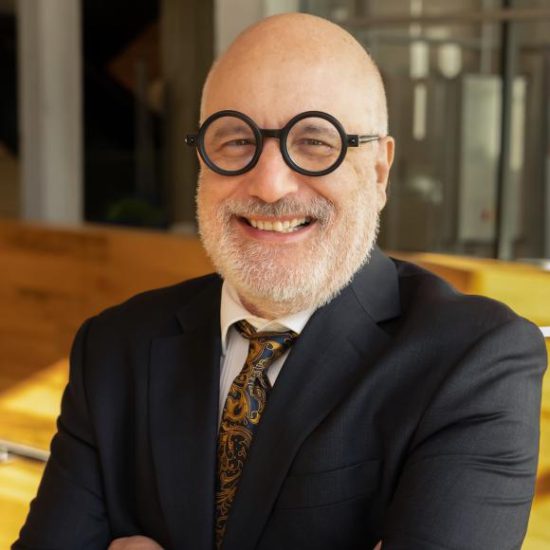
Susan Mayer

Professor Emeritus
University of Chicago Harris School of Public Policy

Susan E. Mayer, professor emeritus at the University of Chicago Harris School of Public Policy and the College, served as dean of Harris from 2002 to 2009. She has published numerous articles and book chapters on the measurement of poverty, the effect of growing up in poor neighborhoods, and the effect of parental income on children’s well-being. She is currently doing research on intergenerational economic mobility and on using behavioral insights to help low-income adults become better parents.

Mayer has been a member of the Institutes of Medicine, National Research Council, Board on Children, Youth and Families, the Board of Directors of Chapin Hall Center for Children, and the Board of Advisors for the Pew Charitable Trust Economic Mobility Project. She has also been a member of the General Accounting Office Educators’ Advisory Panel, the National Academy of Sciences Committee on National Statistics Panel to Review U.S. Department of Agriculture’s Measurement of Food Insecurity and Hunger, and the Committee on Standards of Evidence and the Quality of Behavioral and Social Sciences Research. Mayer has an honorary Doctor of Laws degreed conferred by Lake Forest College. Mayer is the past director and deputy director of the Northwestern University/University of Chicago Joint Center for Poverty Research. She has served as an associate editor for the American Journal of Sociology.

Susan Mayer

Professor Emeritus
University of Chicago Harris School of Public Policy

Susan E. Mayer, professor emeritus at the University of Chicago Harris School of Public Policy and the College, served as dean of Harris from 2002 to 2009. She has published numerous articles and book chapters on the measurement of poverty, the effect of growing up in poor neighborhoods, and the effect of parental income on children’s well-being. She is currently doing research on intergenerational economic mobility and on using behavioral insights to help low-income adults become better parents.

Mayer has been a member of the Institutes of Medicine, National Research Council, Board on Children, Youth and Families, the Board of Directors of Chapin Hall Center for Children, and the Board of Advisors for the Pew Charitable Trust Economic Mobility Project. She has also been a member of the General Accounting Office Educators’ Advisory Panel, the National Academy of Sciences Committee on National Statistics Panel to Review U.S. Department of Agriculture’s Measurement of Food Insecurity and Hunger, and the Committee on Standards of Evidence and the Quality of Behavioral and Social Sciences Research. Mayer has an honorary Doctor of Laws degreed conferred by Lake Forest College. Mayer is the past director and deputy director of the Northwestern University/University of Chicago Joint Center for Poverty Research. She has served as an associate editor for the American Journal of Sociology.

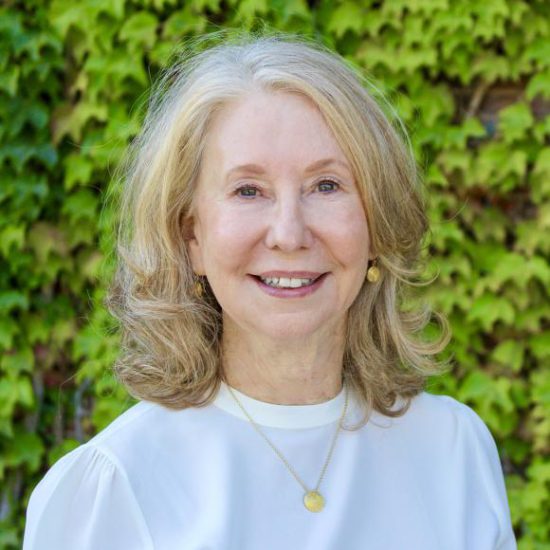
Tom Rosenstiel

Senior Fellow
NORC

Tom is a Professor of the Practice and the Eleanor Merrill Scholar on the Future of Journalism at the University of Maryland. He is also the author of 11 books, including four novels. Among his nonfiction works, The Elements of Journalism, co-authored with Bill Kovach, is used as a text in most journalism schools in the country and has been translated into more than 25 languages.

Before joining the faculty at the University of Maryland, he was the executive director of the American Press Institute, a think tank focused on the sustainability of journalism. Prior to that he was the founder and for 16 years the director of the Project for Excellence in Journalism, one of the five original projects of the Pew Research Center. During his journalism career, he was the press critic of the Los Angeles Times for a decade, the chief congressional correspondent at Newsweek, a commentator on MSNBC, and editor and reporter at his hometown newspaper in Palo Alto. He began his career as a reporter for Jack Anderson’s Washington Merry Go ‘Round column.

At the American Press Institute, Tom co-founded with AP-NORC the Media Insight Project, which has produced a number of groundbreaking studies on public trust and media consumption. His work at API, Pew, and from his books have generated more than 60,000 academic citations.

Tom serves on a number of boards, including the National Press Foundation and the advisory board of the Kaiser Health News Service. He is the winner of numerous awards, including four times for journalism research from the Society of Professional Journalists and for press criticism of Penn State University. He is also winner of the Goldsmith Book Award from Harvard University.

Tom Rosenstiel

Senior Fellow
NORC

Tom is a Professor of the Practice and the Eleanor Merrill Scholar on the Future of Journalism at the University of Maryland. He is also the author of 11 books, including four novels. Among his nonfiction works, The Elements of Journalism, co-authored with Bill Kovach, is used as a text in most journalism schools in the country and has been translated into more than 25 languages.

Before joining the faculty at the University of Maryland, he was the executive director of the American Press Institute, a think tank focused on the sustainability of journalism. Prior to that he was the founder and for 16 years the director of the Project for Excellence in Journalism, one of the five original projects of the Pew Research Center. During his journalism career, he was the press critic of the Los Angeles Times for a decade, the chief congressional correspondent at Newsweek, a commentator on MSNBC, and editor and reporter at his hometown newspaper in Palo Alto. He began his career as a reporter for Jack Anderson’s Washington Merry Go ‘Round column.

At the American Press Institute, Tom co-founded with AP-NORC the Media Insight Project, which has produced a number of groundbreaking studies on public trust and media consumption. His work at API, Pew, and from his books have generated more than 60,000 academic citations.

Tom serves on a number of boards, including the National Press Foundation and the advisory board of the Kaiser Health News Service. He is the winner of numerous awards, including four times for journalism research from the Society of Professional Journalists and for press criticism of Penn State University. He is also winner of the Goldsmith Book Award from Harvard University.

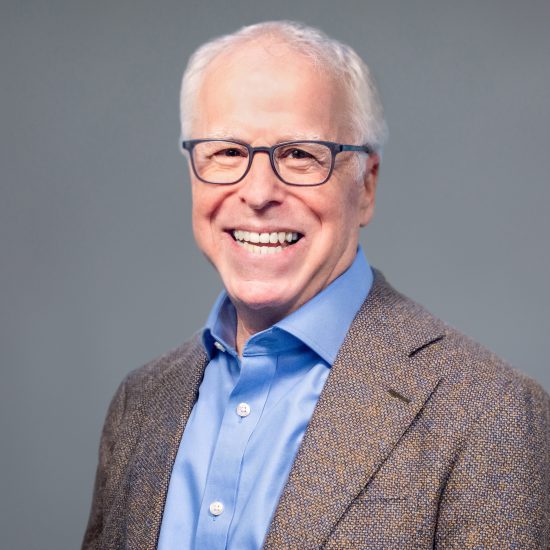
Trevor Tompson

Senior Fellow
NORC
Phone: (773) 256-6338

Trevor is a senior fellow in NORC’s Public Affairs & Media Research department. He has conducted hundreds of surveys on a wide range of topics, including politics and elections, racial attitudes, health care policy, technology, and sports and entertainment. He has conducted research in dozens of countries including the United States, the E.U., and countries such as Cuba, Russia, and Vietnam.

Trevor was one of the founders of The Associated Press-NORC Center for Public Affairs Research, a partnership of AP and NORC that aims to combine the best of journalism and social science research to bring insights about important issues to policymakers and the public. He was also instrumental in creating the Media Insight Project, a partnership of AP, NORC, and the American Press Institute to better understand how people consume news. Trevor led the team at NORC that developed AP VoteCast, the next generation election survey data product developed as an alternative to the legacy U.S. media exit poll.

Prior to joining NORC, Trevor was global director of polling for AP, the world’s largest independent news agency, where he also served as polling editor and a senior analyst for political and elections coverage. He has also held positions with several other research companies and universities.

Trevor graduated with a degree in political science from Carleton University in Ottawa, Canada, and he received graduate level training in survey methodology, political science and political psychology at Northwestern University and The Ohio State University. Trevor’s work has been published in leading academic journals including Public Opinion Quarterly and the Journal of Experimental Social Psychology. His surveys have also been covered by media around the globe, including on every major national television newscast in the United States and on the front pages of hundreds of newspapers.

Trevor is a past member of the executive council of the World Association for Public Opinion Research and has held several other offices in professional organizations, including as a member of the professional standards committee of AAPOR.

Trevor Tompson

Senior Fellow
NORC
(773) 256-6338

Trevor is a senior fellow in NORC’s Public Affairs & Media Research department. He has conducted hundreds of surveys on a wide range of topics, including politics and elections, racial attitudes, health care policy, technology, and sports and entertainment. He has conducted research in dozens of countries including the United States, the E.U., and countries such as Cuba, Russia, and Vietnam.

Trevor was one of the founders of The Associated Press-NORC Center for Public Affairs Research, a partnership of AP and NORC that aims to combine the best of journalism and social science research to bring insights about important issues to policymakers and the public. He was also instrumental in creating the Media Insight Project, a partnership of AP, NORC, and the American Press Institute to better understand how people consume news. Trevor led the team at NORC that developed AP VoteCast, the next generation election survey data product developed as an alternative to the legacy U.S. media exit poll.

Prior to joining NORC, Trevor was global director of polling for AP, the world’s largest independent news agency, where he also served as polling editor and a senior analyst for political and elections coverage. He has also held positions with several other research companies and universities.

Trevor graduated with a degree in political science from Carleton University in Ottawa, Canada, and he received graduate level training in survey methodology, political science and political psychology at Northwestern University and The Ohio State University. Trevor’s work has been published in leading academic journals including Public Opinion Quarterly and the Journal of Experimental Social Psychology. His surveys have also been covered by media around the globe, including on every major national television newscast in the United States and on the front pages of hundreds of newspapers.

Trevor is a past member of the executive council of the World Association for Public Opinion Research and has held several other offices in professional organizations, including as a member of the professional standards committee of AAPOR.

Vadim Volos

Vice President
NORC

Vadim is a vice president in the Public Affairs & Media Research department at NORC. He guides and manages survey research on topics dealing with public affairs and helps present complex issues to a wide variety of audiences.

In his role, Vadim brings over 25 years of experience in public affairs and public opinion research. He has extensive experience directing work for non-federal clients, including academic, nonprofit, public relations firms, and media and technology companies, both in the United States and internationally. Vadim joined NORC from Ipsos, where he was a senior vice president and was previously part of GfK that was acquired by Ipsos; both firms are global market research and public opinion companies with whom NORC has collaborated in the past. While at GfK, Vadim worked with The Associated Press-NORC Center for Public Affairs Research to manage the field work for our project in Russia.

Vadim Volos

Vice President
NORC

Vadim is a vice president in the Public Affairs & Media Research department at NORC. He guides and manages survey research on topics dealing with public affairs and helps present complex issues to a wide variety of audiences.

In his role, Vadim brings over 25 years of experience in public affairs and public opinion research. He has extensive experience directing work for non-federal clients, including academic, nonprofit, public relations firms, and media and technology companies, both in the United States and internationally. Vadim joined NORC from Ipsos, where he was a senior vice president and was previously part of GfK that was acquired by Ipsos; both firms are global market research and public opinion companies with whom NORC has collaborated in the past. While at GfK, Vadim worked with The Associated Press-NORC Center for Public Affairs Research to manage the field work for our project in Russia.