Filter By:

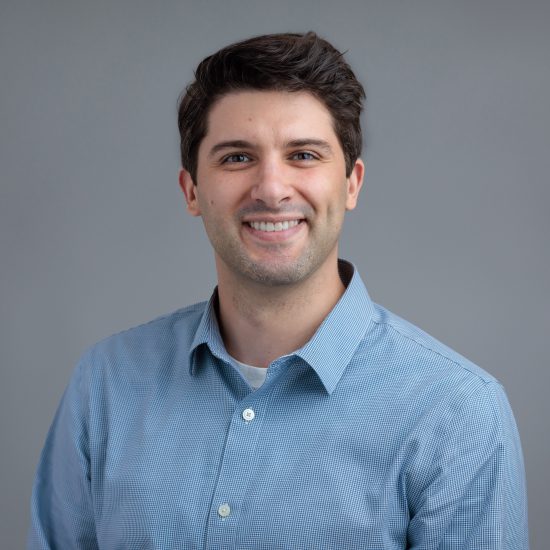
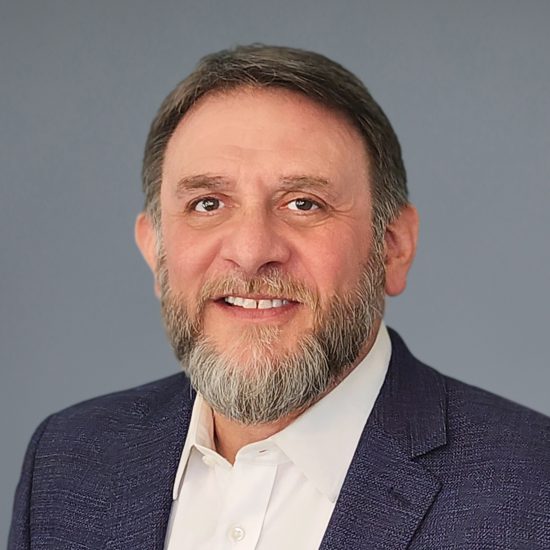
Steven Durlauf

Frank P. Hixon Distinguished Service Professor
University of Chicago Harris School of Public Policy

Steven Neil Durlauf is the Frank P. Hixon Distinguished Service Professor and the Director of the Stone Center for Research on Wealth Inequality and Mobility at the University of Chicago Harris School of Public Policy. Prior to this appointment, he was William F. Vilas Research Professor and Kenneth J. Arrow Professor of Economics at the University of Wisconsin-Madison.

Durlauf received a BA in economics from Harvard in 1980, where he was elected to Phi Beta Kappa, and a Ph.D. in economics from Yale in 1986. He is a Fellow of the Econometric Society, a Fellow of the Society for the Advancement of Economic Theory, a Fellow of the International Association of Applied Econometrics, and a Research Associate of the National Bureau of Economic Research. He was elected to the American Academy of Arts and Sciences in 2011.

Durlauf was Co-Director of the Human Capital and Economic Opportunity Working Group from 2010 to 2022, an international research network linking scholars across disciplines in the study of inequality and the sources of human flourishing and destitution. Additionally, Durlauf served as Economics Program Director of the Santa Fe institute from 1996-1998.

Durlauf is currently a General Editor of the Elsevier Handbooks in Economics series. He was a General Editor of The New Palgrave Dictionary of Economics, revised edition, published in 2008, the most extensive compendium of economic knowledge in the world. He was also the Editor of the Journal of Economic Literature from 2013 to 2022.

Durlauf’s research spans many topics in economics. His most important substantive contributions involve the areas of poverty, inequality and economic growth. Much of his research has attempted to integrate sociological ideas into economic analysis. His major methodological contributions include both economic theory and econometrics. He helped pioneer the application of statistical mechanics techniques to the modelling of socioeconomic behavior and has also developed identification analyses for the empirical analogs of these models. Other research has focused on techniques for policy evaluation and the econometrics of cross-country income differences. Durlauf is also known as a critic of the use of the concept of social capital by social scientists and has also challenged the ways that agent-based modelling and complexity theory have been employed by social and natural scientists to study socioeconomic phenomena.

Steven Durlauf

Frank P. Hixon Distinguished Service Professor
University of Chicago Harris School of Public Policy

Steven Neil Durlauf is the Frank P. Hixon Distinguished Service Professor and the Director of the Stone Center for Research on Wealth Inequality and Mobility at the University of Chicago Harris School of Public Policy. Prior to this appointment, he was William F. Vilas Research Professor and Kenneth J. Arrow Professor of Economics at the University of Wisconsin-Madison.

Durlauf received a BA in economics from Harvard in 1980, where he was elected to Phi Beta Kappa, and a Ph.D. in economics from Yale in 1986. He is a Fellow of the Econometric Society, a Fellow of the Society for the Advancement of Economic Theory, a Fellow of the International Association of Applied Econometrics, and a Research Associate of the National Bureau of Economic Research. He was elected to the American Academy of Arts and Sciences in 2011.

Durlauf was Co-Director of the Human Capital and Economic Opportunity Working Group from 2010 to 2022, an international research network linking scholars across disciplines in the study of inequality and the sources of human flourishing and destitution. Additionally, Durlauf served as Economics Program Director of the Santa Fe institute from 1996-1998.

Durlauf is currently a General Editor of the Elsevier Handbooks in Economics series. He was a General Editor of The New Palgrave Dictionary of Economics, revised edition, published in 2008, the most extensive compendium of economic knowledge in the world. He was also the Editor of the Journal of Economic Literature from 2013 to 2022.

Durlauf’s research spans many topics in economics. His most important substantive contributions involve the areas of poverty, inequality and economic growth. Much of his research has attempted to integrate sociological ideas into economic analysis. His major methodological contributions include both economic theory and econometrics. He helped pioneer the application of statistical mechanics techniques to the modelling of socioeconomic behavior and has also developed identification analyses for the empirical analogs of these models. Other research has focused on techniques for policy evaluation and the econometrics of cross-country income differences. Durlauf is also known as a critic of the use of the concept of social capital by social scientists and has also challenged the ways that agent-based modelling and complexity theory have been employed by social and natural scientists to study socioeconomic phenomena.

Jens Ludwig

Edwin A. and Betty L. Bergman Distinguished Service Professor
University of Chicago Harris School of Public Policy

Jens Ludwig is the Edwin A. and Betty L. Bergman Distinguished Service Professor at the University of Chicago, Pritzker Director of the University of Chicago’s Crime Lab, codirector of the Education Lab, and codirector of the National Bureau of Economic Research’s working group on the economics of crime.

His current work focuses on how behavioral science and data science can help solve social problems. He helped found the Crime Lab and the Education Lab to work closely with government agencies to turn these insights into social change out in the real world. Examples of real-world impact include studies of promising social and educational programs that have led to millions of dollars of public sector resources being re-allocated to more effective, evidence-based strategies, working with the Chicago Police Department to implement data-driven management changes that helped substantially reduce gun violence without increasing arrests, and partnership with the Mayor’s Office in New York City to help build and implement a new pretrial risk tool as part of the city’s goal to close Riker’s Island.

Crime Lab and Education Lab projects have been featured in national news outlets such as the New York Times, Washington Post, Wall Street Journal, PBS News Hour, and National Public Radio. In 2014, the Crime Lab was the recipient of a $1 million MacArthur Award for Creative and Effective Institutions, the organizational equivalent of the foundation’s “genius prize.” Ludwig’s research has been published in leading scientific journals in numerous disciplines, including the American Economic Review, the Quarterly Journal of Economics, Science, Proceedings of the National Academy of Sciences, New England Journal of Medicine, Journal of the American Medical Association, and the American Journal of Sociology. He is coauthor with Philip Cook of Gun Violence: The Real Costs (Oxford University Press, 2000), coeditor with Cook of Evaluating Gun Policy (Brookings Institution Press, 2003), and coeditor with Cook and Justin McCray of Controlling Crime: Strategies and Tradeoffs (University of Chicago Press, 2012).

Ludwig received his BA in economics from Rutgers College and his MA and PhD in economics from Duke University. He was previously a professor of public policy at Georgetown University. He is currently on the editorial board of the American Economic Review. In 2012 he was elected vice president of the Association for Public Policy Analysis and Management (APPAM). In 2006 he was awarded APPAM’s David N. Kershaw Prize for Contributions to Public Policy by Age 40. In 2012 he was elected to the Institute of Medicine of the National Academies of Science.

Jens Ludwig

Edwin A. and Betty L. Bergman Distinguished Service Professor
University of Chicago Harris School of Public Policy

Jens Ludwig is the Edwin A. and Betty L. Bergman Distinguished Service Professor at the University of Chicago, Pritzker Director of the University of Chicago’s Crime Lab, codirector of the Education Lab, and codirector of the National Bureau of Economic Research’s working group on the economics of crime.

His current work focuses on how behavioral science and data science can help solve social problems. He helped found the Crime Lab and the Education Lab to work closely with government agencies to turn these insights into social change out in the real world. Examples of real-world impact include studies of promising social and educational programs that have led to millions of dollars of public sector resources being re-allocated to more effective, evidence-based strategies, working with the Chicago Police Department to implement data-driven management changes that helped substantially reduce gun violence without increasing arrests, and partnership with the Mayor’s Office in New York City to help build and implement a new pretrial risk tool as part of the city’s goal to close Riker’s Island.

Crime Lab and Education Lab projects have been featured in national news outlets such as the New York Times, Washington Post, Wall Street Journal, PBS News Hour, and National Public Radio. In 2014, the Crime Lab was the recipient of a $1 million MacArthur Award for Creative and Effective Institutions, the organizational equivalent of the foundation’s “genius prize.” Ludwig’s research has been published in leading scientific journals in numerous disciplines, including the American Economic Review, the Quarterly Journal of Economics, Science, Proceedings of the National Academy of Sciences, New England Journal of Medicine, Journal of the American Medical Association, and the American Journal of Sociology. He is coauthor with Philip Cook of Gun Violence: The Real Costs (Oxford University Press, 2000), coeditor with Cook of Evaluating Gun Policy (Brookings Institution Press, 2003), and coeditor with Cook and Justin McCray of Controlling Crime: Strategies and Tradeoffs (University of Chicago Press, 2012).

Ludwig received his BA in economics from Rutgers College and his MA and PhD in economics from Duke University. He was previously a professor of public policy at Georgetown University. He is currently on the editorial board of the American Economic Review. In 2012 he was elected vice president of the Association for Public Policy Analysis and Management (APPAM). In 2006 he was awarded APPAM’s David N. Kershaw Prize for Contributions to Public Policy by Age 40. In 2012 he was elected to the Institute of Medicine of the National Academies of Science.

Sarah Davis Redman

Principal Research Scientist
Public Health
Phone: 404-240-8406

Sarah is a principal research scientist with 20 years of mixed-methods research and evaluation experience with a focus on qualitative methods. Over the past decade, much of her work has also involved designing, implementing, and evaluating training. Although her work has covered many topics, she is increasingly interested in the impact of natural disasters on morbidity and mortality as well as cancer prevention, screening, and management.

Sarah currently leads NORC’s disaster mortality work including a large cross-center project for the Centers for Disease Control and Prevention (CDC) aimed at improving processes for identifying and reporting disaster-related deaths. Through evaluation and research activities, NORC designed several resource guides, a suite of supplemental materials, and a comprehensive training all publicly available on CDC’s website. This project builds on the work she led for CDC developing a toolkit and accompanying training for medicolegal death investigators to collect data after natural disaster and extreme weather events.

Sarah has also worked with the Health Resources and Services Administration (HRSA)’s Division of Women’s Health on several cervical cancer related trainings and the American Cancer Society (ACS) on evaluating patient navigation programs and Round Table efforts. Prior to joining NORC, Sarah worked as a qualitative analyst on the Chicago Health, Environmental Exposure, and Recreation Study (CHEERS), where she examined the best ways to communicate with local Chicago waterway users about water quality and safety and an evaluation consultant with the Illinois Caucus for Adolescent Health.

Sarah Davis Redman

Principal Research Scientist
Public Health
404-240-8406

Sarah is a principal research scientist with 20 years of mixed-methods research and evaluation experience with a focus on qualitative methods. Over the past decade, much of her work has also involved designing, implementing, and evaluating training. Although her work has covered many topics, she is increasingly interested in the impact of natural disasters on morbidity and mortality as well as cancer prevention, screening, and management.

Sarah currently leads NORC’s disaster mortality work including a large cross-center project for the Centers for Disease Control and Prevention (CDC) aimed at improving processes for identifying and reporting disaster-related deaths. Through evaluation and research activities, NORC designed several resource guides, a suite of supplemental materials, and a comprehensive training all publicly available on CDC’s website. This project builds on the work she led for CDC developing a toolkit and accompanying training for medicolegal death investigators to collect data after natural disaster and extreme weather events.

Sarah has also worked with the Health Resources and Services Administration (HRSA)’s Division of Women’s Health on several cervical cancer related trainings and the American Cancer Society (ACS) on evaluating patient navigation programs and Round Table efforts. Prior to joining NORC, Sarah worked as a qualitative analyst on the Chicago Health, Environmental Exposure, and Recreation Study (CHEERS), where she examined the best ways to communicate with local Chicago waterway users about water quality and safety and an evaluation consultant with the Illinois Caucus for Adolescent Health.

Adam Zelizer

Assistant Professor
University of Chicago Harris School of Public Policy

Adam Zelizer studies legislative politics, with a focus on causal inference. His research examines how legislators make decisions – for example, how they acquire expertise from policy research and influence one another through deliberation – and the effects of individual decision-making processes on policy outcomes. One goal of this research is to figure out which legislative processes work, in the sense of leading to more informed, effective, and broadly-supported public policies, and which don’t.

He received his Ph.D. in Political Science from Columbia University in 2018. He also holds a BA in Political Economy from Columbia University. He joins Harris as an Assistant Professor after spending a year as a postdoctoral researcher and instructor at Harris, during which he taught Analytical Politics II and Field Experiments for Public Policy. His research has been supported by the National Science Foundation, Russell Sage Foundation, Cato Institute, Open Society Foundations, and Abdul Latif Jameel Poverty Action Lab.

Adam Zelizer

Assistant Professor
University of Chicago Harris School of Public Policy

Adam Zelizer studies legislative politics, with a focus on causal inference. His research examines how legislators make decisions – for example, how they acquire expertise from policy research and influence one another through deliberation – and the effects of individual decision-making processes on policy outcomes. One goal of this research is to figure out which legislative processes work, in the sense of leading to more informed, effective, and broadly-supported public policies, and which don’t.

He received his Ph.D. in Political Science from Columbia University in 2018. He also holds a BA in Political Economy from Columbia University. He joins Harris as an Assistant Professor after spending a year as a postdoctoral researcher and instructor at Harris, during which he taught Analytical Politics II and Field Experiments for Public Policy. His research has been supported by the National Science Foundation, Russell Sage Foundation, Cato Institute, Open Society Foundations, and Abdul Latif Jameel Poverty Action Lab.

Dan Malato

Senior Research Director
NORC
Phone: (312) 357-3893

Dan is a senior research director with the Public Affairs & Media Research department. During his tenure, he has worked on dozens of projects, including many with The Associated Press-NORC Center for Public Affairs Research. He has experience with questionnaire development, data management, data review, analysis, and reporting on a wide variety of survey projects of varying complexities.

Dan specializes in data delivery for large, high-profile surveys. He currently leads the data delivery for the National Survey of Fishing, Hunting & Wildlife Associated Recreation, which provides important data on participation and expenditures related to these outdoor activities. From 2018 to 2024, Dan led the data management and data delivery for AP VoteCast, a groundbreaking election survey that allowed for more precise measures of voters’ opinions. VoteCast surveys included more than 120,000 interviews conducted in the week before the election and involved rapid, continuous data delivery on Election Night for use in news coverage nationwide.

Communicating survey findings to a wider audience has been a hallmark of Dan’s tenure at NORC. A recent example is the 2024 Los Angeles Times/NORC Poll on LGBTQ+ Communities, which updated a 1985 LA Times study to track how attitudes in the United States have changed toward gay and lesbian people. He has also served as project manager on The Long-Term Care Poll, a series of surveys conducted by The AP-NORC Center from 2013 to 2023 that explore issues related to aging in America.

Dan holds a MA in Political Science from The George Washington University. Prior to joining NORC, he worked at the George Washington Institute of Public Policy.

Dan Malato

Senior Research Director
NORC
(312) 357-3893

Dan is a senior research director with the Public Affairs & Media Research department. During his tenure, he has worked on dozens of projects, including many with The Associated Press-NORC Center for Public Affairs Research. He has experience with questionnaire development, data management, data review, analysis, and reporting on a wide variety of survey projects of varying complexities.

Dan specializes in data delivery for large, high-profile surveys. He currently leads the data delivery for the National Survey of Fishing, Hunting & Wildlife Associated Recreation, which provides important data on participation and expenditures related to these outdoor activities. From 2018 to 2024, Dan led the data management and data delivery for AP VoteCast, a groundbreaking election survey that allowed for more precise measures of voters’ opinions. VoteCast surveys included more than 120,000 interviews conducted in the week before the election and involved rapid, continuous data delivery on Election Night for use in news coverage nationwide.

Communicating survey findings to a wider audience has been a hallmark of Dan’s tenure at NORC. A recent example is the 2024 Los Angeles Times/NORC Poll on LGBTQ+ Communities, which updated a 1985 LA Times study to track how attitudes in the United States have changed toward gay and lesbian people. He has also served as project manager on The Long-Term Care Poll, a series of surveys conducted by The AP-NORC Center from 2013 to 2023 that explore issues related to aging in America.

Dan holds a MA in Political Science from The George Washington University. Prior to joining NORC, he worked at the George Washington Institute of Public Policy.