Filter By:

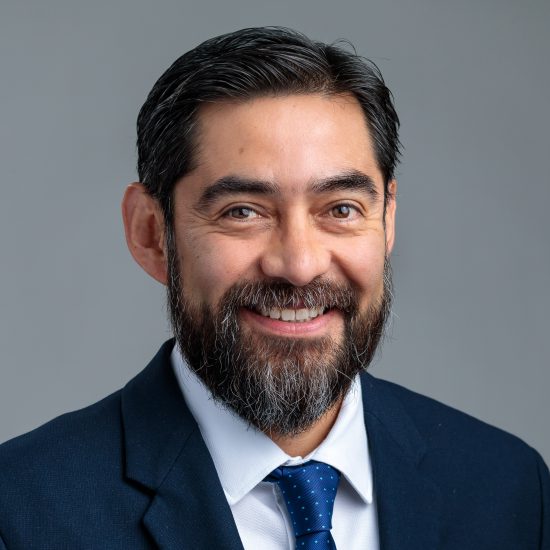
René Bautista

Principal Research Scientist
Methodology & Quantitative Social Sciences
Phone: (312) 357-3867

René is a principal research scientist in the Methodology & Quantitative Social Sciences department at NORC at the University of Chicago, where he is co-principal investigator and director of the General Social Survey (GSS). During his tenure at NORC, he has contributed to the design and execution of major government- and privately funded projects, covering qualitative and quantitative aspects. René’s professional experience at NORC has provided him with an excellent understanding of critical topics in the survey industry. Whether it is the continually evolving methods of data collection, a growing distrust of surveys, or issues in communicating and interpreting findings, his work has supported clients, the public, the media, and academics alike.

René has provided statistical guidance to a variety of projects, including the National Survey of Early Care and Education (NSECE), a project conducted on behalf of the Office of Planning, Research, and Evaluation (OPRE). His work in the NSECE has ranged from improving programming methodologies for data production to conducting latent class analyses to understand supply and demand of education services. René has extensive experience transitioning survey instruments into alternative modes of data collection, preserving measurement properties, comparability over time, and data quality. For example, René led the redesign of the National Survey of Children’s Health (2015) which evolved from a CATI instrument to a self-administered instrument (paper- and web-based) with a focus on maintaining measurement properties, given declining response rates in the telephone mode. During the global COVID-19 pandemic, René led the transitioning process to adapt the General Social Survey (GSS) from face-to-face to a multi-mode strategy, putting special care in preserving measurement properties, comparability over time, and data quality.

René has served as lead methodologist for activities impacting the Medicare Current Beneficiary Survey (MCBS), studying how limited English proficiency (LEP) may impede access to healthcare. Also, René served as director for the Worker Voice Study, a survey commissioned by the Massachusetts Institute of Technology (MIT) Sloan School of Management, aiming to collect information among 4,000 workers across the country. Previously, he worked at the Gallup Research Center at the University of Nebraska.


René Bautista

Principal Research Scientist
Methodology & Quantitative Social Sciences
(312) 357-3867

René is a principal research scientist in the Methodology & Quantitative Social Sciences department at NORC at the University of Chicago, where he is co-principal investigator and director of the General Social Survey (GSS). During his tenure at NORC, he has contributed to the design and execution of major government- and privately funded projects, covering qualitative and quantitative aspects. René’s professional experience at NORC has provided him with an excellent understanding of critical topics in the survey industry. Whether it is the continually evolving methods of data collection, a growing distrust of surveys, or issues in communicating and interpreting findings, his work has supported clients, the public, the media, and academics alike.

René has provided statistical guidance to a variety of projects, including the National Survey of Early Care and Education (NSECE), a project conducted on behalf of the Office of Planning, Research, and Evaluation (OPRE). His work in the NSECE has ranged from improving programming methodologies for data production to conducting latent class analyses to understand supply and demand of education services. René has extensive experience transitioning survey instruments into alternative modes of data collection, preserving measurement properties, comparability over time, and data quality. For example, René led the redesign of the National Survey of Children’s Health (2015) which evolved from a CATI instrument to a self-administered instrument (paper- and web-based) with a focus on maintaining measurement properties, given declining response rates in the telephone mode. During the global COVID-19 pandemic, René led the transitioning process to adapt the General Social Survey (GSS) from face-to-face to a multi-mode strategy, putting special care in preserving measurement properties, comparability over time, and data quality.

René has served as lead methodologist for activities impacting the Medicare Current Beneficiary Survey (MCBS), studying how limited English proficiency (LEP) may impede access to healthcare. Also, René served as director for the Worker Voice Study, a survey commissioned by the Massachusetts Institute of Technology (MIT) Sloan School of Management, aiming to collect information among 4,000 workers across the country. Previously, he worked at the Gallup Research Center at the University of Nebraska.

Bruce G. Taylor

Senior Fellow
Public Health
Phone: (301) 634-9512

Bruce is a senior fellow with NORC at the University of Chicago in the Public Health department. He has over 29 years of experience in applied research, field experiments, and statistical analysis. His work includes multi-method approaches using nationally representative household panels; organizational surveys with service providers, jails, and law enforcement; and the collection of survey and biospecimen data. He has conducted studies on violence prevention, violent offenders, victimization, policing, substance use and stigma towards substance use. His work has focused on identifying demographic and contextual explanations for a variety of forms of violent and related risky behaviors. He has conducted research funded by a number of U.S. federal sources, such as the Department of Defense, Department of Education, Department of Health and Human Services, and Department of Justice. His research has also been supported by state and municipal sources, along with several foundations and other private sources.

At NORC, Bruce is the co-principal investigator (Co-PI) of two Department of Defense evaluation contracts: Innovations in Sexual Assault Preventions Pilot Program (ISAPPP) Evaluation and the Evaluation Training and Technical Assistance Center (ETAC). For the Centers for Disease Control and Prevention (CDC), he is the project director for a study on youth health and wellness issues and the PI for a grant on youth firearm violence perpetration using a nationally representative longitudinal design. For NIH, he is a Co-I for the Justice Justice-Community Opioid Innovation Network’s (JCOIN), Methodology Center (MAARC) analyzing the effectiveness of the JCOIN network of 11 clinical research centers testing the effectiveness of medicated assisted treatments for opioid use disorder. He was a Co-PI of the first comprehensive nationally representative longitudinal youth violence panel (STRiV) for eight years, a Co-PI of the Interpersonal Conflict and Resolution (iCOR) Study of young adults, and a Co-PI of the first national survey on victim service providers.

Prior to joining NORC, Bruce’s early work in violence research explored the psychological recovery process of sexual assault victims and explored the correlates of post-crime distress and social networks. In the mid to late 1990s, he implemented a five-year program of experimental longitudinal studies in New York City on the effects of a variety of interventions on the problem of intimate partner violence (IPV). This work was followed by randomized controlled trials (RCTs) on the effectiveness of batterer treatment programs for men in community and jail-based settings. Since 2005, with funding from three U.S. Department of Justice (USDOJ) grants and two contracts from the CDC, he conducted a series of field experiments on the effectiveness of primary prevention programs on IPV and sexual violence. Also, from 1998 to 2002, he was the deputy director of the Arrestee Drug Abuse Monitoring Program, a program within the U.S. Department of Justice’s National Institute of Justice.

Bruce G. Taylor

Senior Fellow
Public Health
(301) 634-9512

Bruce is a senior fellow with NORC at the University of Chicago in the Public Health department. He has over 29 years of experience in applied research, field experiments, and statistical analysis. His work includes multi-method approaches using nationally representative household panels; organizational surveys with service providers, jails, and law enforcement; and the collection of survey and biospecimen data. He has conducted studies on violence prevention, violent offenders, victimization, policing, substance use and stigma towards substance use. His work has focused on identifying demographic and contextual explanations for a variety of forms of violent and related risky behaviors. He has conducted research funded by a number of U.S. federal sources, such as the Department of Defense, Department of Education, Department of Health and Human Services, and Department of Justice. His research has also been supported by state and municipal sources, along with several foundations and other private sources.

At NORC, Bruce is the co-principal investigator (Co-PI) of two Department of Defense evaluation contracts: Innovations in Sexual Assault Preventions Pilot Program (ISAPPP) Evaluation and the Evaluation Training and Technical Assistance Center (ETAC). For the Centers for Disease Control and Prevention (CDC), he is the project director for a study on youth health and wellness issues and the PI for a grant on youth firearm violence perpetration using a nationally representative longitudinal design. For NIH, he is a Co-I for the Justice Justice-Community Opioid Innovation Network’s (JCOIN), Methodology Center (MAARC) analyzing the effectiveness of the JCOIN network of 11 clinical research centers testing the effectiveness of medicated assisted treatments for opioid use disorder. He was a Co-PI of the first comprehensive nationally representative longitudinal youth violence panel (STRiV) for eight years, a Co-PI of the Interpersonal Conflict and Resolution (iCOR) Study of young adults, and a Co-PI of the first national survey on victim service providers.

Prior to joining NORC, Bruce’s early work in violence research explored the psychological recovery process of sexual assault victims and explored the correlates of post-crime distress and social networks. In the mid to late 1990s, he implemented a five-year program of experimental longitudinal studies in New York City on the effects of a variety of interventions on the problem of intimate partner violence (IPV). This work was followed by randomized controlled trials (RCTs) on the effectiveness of batterer treatment programs for men in community and jail-based settings. Since 2005, with funding from three U.S. Department of Justice (USDOJ) grants and two contracts from the CDC, he conducted a series of field experiments on the effectiveness of primary prevention programs on IPV and sexual violence. Also, from 1998 to 2002, he was the deputy director of the Arrestee Drug Abuse Monitoring Program, a program within the U.S. Department of Justice’s National Institute of Justice.

Tom Rosenstiel

Senior Fellow
NORC

Tom is a Professor of the Practice and the Eleanor Merrill Scholar on the Future of Journalism at the University of Maryland. He is also the author of 11 books, including four novels. Among his nonfiction works, The Elements of Journalism, co-authored with Bill Kovach, is used as a text in most journalism schools in the country and has been translated into more than 25 languages.

Before joining the faculty at the University of Maryland, he was the executive director of the American Press Institute, a think tank focused on the sustainability of journalism. Prior to that he was the founder and for 16 years the director of the Project for Excellence in Journalism, one of the five original projects of the Pew Research Center. During his journalism career, he was the press critic of the Los Angeles Times for a decade, the chief congressional correspondent at Newsweek, a commentator on MSNBC, and editor and reporter at his hometown newspaper in Palo Alto. He began his career as a reporter for Jack Anderson’s Washington Merry Go ‘Round column.

At the American Press Institute, Tom co-founded with AP-NORC the Media Insight Project, which has produced a number of groundbreaking studies on public trust and media consumption. His work at API, Pew, and from his books have generated more than 60,000 academic citations.

Tom serves on a number of boards, including the National Press Foundation and the advisory board of the Kaiser Health News Service. He is the winner of numerous awards, including four times for journalism research from the Society of Professional Journalists and for press criticism of Penn State University. He is also winner of the Goldsmith Book Award from Harvard University.

Tom Rosenstiel

Senior Fellow
NORC

Tom is a Professor of the Practice and the Eleanor Merrill Scholar on the Future of Journalism at the University of Maryland. He is also the author of 11 books, including four novels. Among his nonfiction works, The Elements of Journalism, co-authored with Bill Kovach, is used as a text in most journalism schools in the country and has been translated into more than 25 languages.

Before joining the faculty at the University of Maryland, he was the executive director of the American Press Institute, a think tank focused on the sustainability of journalism. Prior to that he was the founder and for 16 years the director of the Project for Excellence in Journalism, one of the five original projects of the Pew Research Center. During his journalism career, he was the press critic of the Los Angeles Times for a decade, the chief congressional correspondent at Newsweek, a commentator on MSNBC, and editor and reporter at his hometown newspaper in Palo Alto. He began his career as a reporter for Jack Anderson’s Washington Merry Go ‘Round column.

At the American Press Institute, Tom co-founded with AP-NORC the Media Insight Project, which has produced a number of groundbreaking studies on public trust and media consumption. His work at API, Pew, and from his books have generated more than 60,000 academic citations.

Tom serves on a number of boards, including the National Press Foundation and the advisory board of the Kaiser Health News Service. He is the winner of numerous awards, including four times for journalism research from the Society of Professional Journalists and for press criticism of Penn State University. He is also winner of the Goldsmith Book Award from Harvard University.

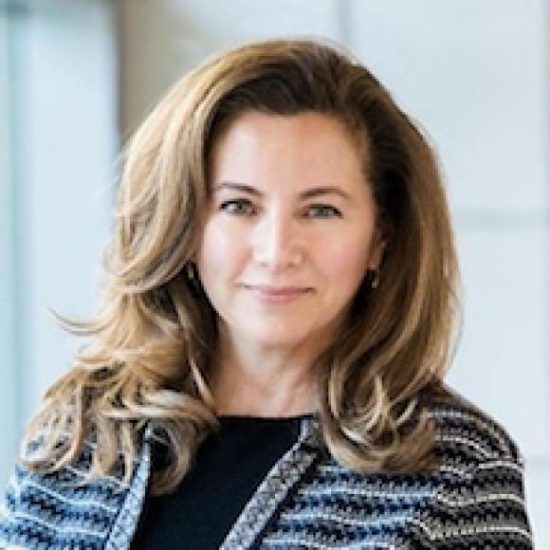
Susan Mayer

Professor Emeritus, Co-Director Behavioral Insights and Parenting Lab
University of Chicago Harris School of Public Policy

Susan E. Mayer, professor emeritus at the University of Chicago Harris School of Public Policy and the College, served as dean of Harris from 2002 to 2009. She has published numerous articles and book chapters on the measurement of poverty, the effect of growing up in poor neighborhoods, and the effect of parental income on children’s well-being. She is currently doing research on intergenerational economic mobility and on using behavioral insights to help low-income adults become better parents.

Mayer has been a member of the Institutes of Medicine, National Research Council, Board on Children, Youth and Families, the Board of Directors of Chapin Hall Center for Children, and the Board of Advisors for the Pew Charitable Trust Economic Mobility Project. She has also been a member of the General Accounting Office Educators’ Advisory Panel, the National Academy of Sciences Committee on National Statistics Panel to Review U.S. Department of Agriculture’s Measurement of Food Insecurity and Hunger, and the Committee on Standards of Evidence and the Quality of Behavioral and Social Sciences Research. Mayer has an honorary Doctor of Laws degreed conferred by Lake Forest College. Mayer is the past director and deputy director of the Northwestern University/University of Chicago Joint Center for Poverty Research. She has served as an associate editor for the American Journal of Sociology.

Susan Mayer

Professor Emeritus, Co-Director Behavioral Insights and Parenting Lab
University of Chicago Harris School of Public Policy

Susan E. Mayer, professor emeritus at the University of Chicago Harris School of Public Policy and the College, served as dean of Harris from 2002 to 2009. She has published numerous articles and book chapters on the measurement of poverty, the effect of growing up in poor neighborhoods, and the effect of parental income on children’s well-being. She is currently doing research on intergenerational economic mobility and on using behavioral insights to help low-income adults become better parents.

Mayer has been a member of the Institutes of Medicine, National Research Council, Board on Children, Youth and Families, the Board of Directors of Chapin Hall Center for Children, and the Board of Advisors for the Pew Charitable Trust Economic Mobility Project. She has also been a member of the General Accounting Office Educators’ Advisory Panel, the National Academy of Sciences Committee on National Statistics Panel to Review U.S. Department of Agriculture’s Measurement of Food Insecurity and Hunger, and the Committee on Standards of Evidence and the Quality of Behavioral and Social Sciences Research. Mayer has an honorary Doctor of Laws degreed conferred by Lake Forest College. Mayer is the past director and deputy director of the Northwestern University/University of Chicago Joint Center for Poverty Research. She has served as an associate editor for the American Journal of Sociology.

Ariel Kalil

Professor, Co-Director Behavioral Insights and Parenting Lab
University of Chicago Harris School of Public Policy
Phone: (773) 834-2090

Ariel Kalil is a professor at the University of Chicago Harris School of Public Policy. At Harris, she directs the Center for Human Potential and Public Policy and co-directs the Behavioral Insights and Parenting Lab. She also holds an appointment as an adjunct professor in the Norwegian School of Economics in Bergen, Norway. She is a developmental psychologist who studies economic conditions, parenting, and child development. Her current research examines the historical evolution of income-based gaps in parenting behavior and children’s cognitive and non-cognitive skills. In addition, at the Behavioral Insights and Parenting Lab, she is leading a variety of field experiments designed to strengthen parental engagement and child development in low-income families using tools drawn from behavioral economics and neuroscience.

Kalil received her PhD in developmental psychology from the University of Michigan. Before joining the Harris faculty in 1999, she completed a postdoctoral fellowship at the University of Michigan’s National Poverty Center. Kalil has received the William T. Grant Foundation Faculty Scholars Award, the Changing Faces of America’s Children Young Scholars Award from the Foundation for Child Development, the National Academy of Education/Spencer Postdoctoral Fellowship, and in 2003 she was the first-ever recipient of the Society for Research in Child Development (SRCD) Award for Early Research Contributions. Her work has been funded by NIH, NSF, and by a number of private foundations.

Ariel Kalil

Professor, Co-Director Behavioral Insights and Parenting Lab
University of Chicago Harris School of Public Policy
(773) 834-2090

Ariel Kalil is a professor at the University of Chicago Harris School of Public Policy. At Harris, she directs the Center for Human Potential and Public Policy and co-directs the Behavioral Insights and Parenting Lab. She also holds an appointment as an adjunct professor in the Norwegian School of Economics in Bergen, Norway. She is a developmental psychologist who studies economic conditions, parenting, and child development. Her current research examines the historical evolution of income-based gaps in parenting behavior and children’s cognitive and non-cognitive skills. In addition, at the Behavioral Insights and Parenting Lab, she is leading a variety of field experiments designed to strengthen parental engagement and child development in low-income families using tools drawn from behavioral economics and neuroscience.

Kalil received her PhD in developmental psychology from the University of Michigan. Before joining the Harris faculty in 1999, she completed a postdoctoral fellowship at the University of Michigan’s National Poverty Center. Kalil has received the William T. Grant Foundation Faculty Scholars Award, the Changing Faces of America’s Children Young Scholars Award from the Foundation for Child Development, the National Academy of Education/Spencer Postdoctoral Fellowship, and in 2003 she was the first-ever recipient of the Society for Research in Child Development (SRCD) Award for Early Research Contributions. Her work has been funded by NIH, NSF, and by a number of private foundations.