
September 16, 2026
A new poll from The Associated Press-NORC Center for Public Affairs Research and the Energy Policy Institute at the University of Chicago (EPIC) finds that 53% of Americans are extremely or very concerned about the environmental impacts of AI, up from 41% who said the same in 2025. Younger adults ages 18-29 have become particularly concerned, increasing from 38% last year to 60% today and moving from levels similar to other age groups to the highest level of concern.
Forty-seven percent of Americans think AI will do more to hurt rather than help the environment, up from 33% who said the same in 2025.
Most adults are at least somewhat concerned about data centers’ potential impact on local electricity prices, water supply, and power outages, although half feel they will be at least somewhat beneficial for technological advancement and job creation. Regardless of partisanship, most Americans support policies requiring data centers to cover the costs of electric grid upgrades, use clean energy sources, and limit the number of new facilities that can be built.
The study also explored attitudes toward climate change, energy policy, and electric vehicles (EVs). Most Americans agree that climate change is happening and is caused by human activity, a trend that has remained stable in recent years. There is a large partisan divide in these attitudes, however, with Democrats more likely than Republicans to believe climate change is occurring (92% vs. 55%) and is caused mostly by human activity (68% vs. 34%). About 2 in 3 believe that oil and gas companies, the federal government, and large businesses and corporations have a lot of responsibility to address climate change, while just 4 in 10 say the same about developing countries and individual people.
Nearly all Americans (94%) have experienced extreme weather in their community in the past year, and the vast majority believe that climate change was at least one of the contributing factors. A third of Americans have experienced an increase in premiums or deductibles for homeowners or renters’ insurance as a result of extreme weather events, and a quarter have considered moving to avoid the impacts of extreme weather.
There is significant partisan agreement when it comes to specific environmental policies. Eight in 10 Americans, including a large majority of Democrats and Republicans, support protecting conservation lands and wildlife. And a majority of Americans support enforcing strict clean air and water regulations (69%) and providing incentives for new renewable energy projects (63%), including 6 in 10 Republicans and 8 in 10 Democrats. Few support rolling back environmental regulations.
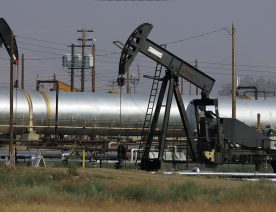
Americans’ views on expanding U.S. oil and gas production have not changed from last year, before the war in Iran, and half of adults oppose auctioning off additional public land for oil drilling.
With gas prices rising this year, including hitting a record Labor Day high, cost is an important factor when thinking about both reasons and barriers to purchasing an EV. Americans are slightly more likely to say they would buy an EV to save money on gas than they were in 2025 (74% vs 68%). At the same time, about 8 in 10 Americans across income levels cite the purchase price of a new EV as an obstacle to buying one.
This nationwide poll was conducted by The AP-NORC Center and the Energy Policy Institute at the University of Chicago (EPIC) from July 7 – 24, 2026, using TrueNorth®, which combines a sample from AmeriSpeak, the probability-based panel of NORC at the University of Chicago, with a non-probability panel sample. Online and telephone interviews using landlines and cell phones were conducted with 3,424 adults. The margin of sampling error is +/- 2.2 percentage points.
- Suggested Citation: The AP-NORC Center for Public Affairs Research. (September, 2026). https://apnorc.org/projects/americans-are-increasingly-concerned-about-the-environmental-consequences-of-ai/