
Filter By:

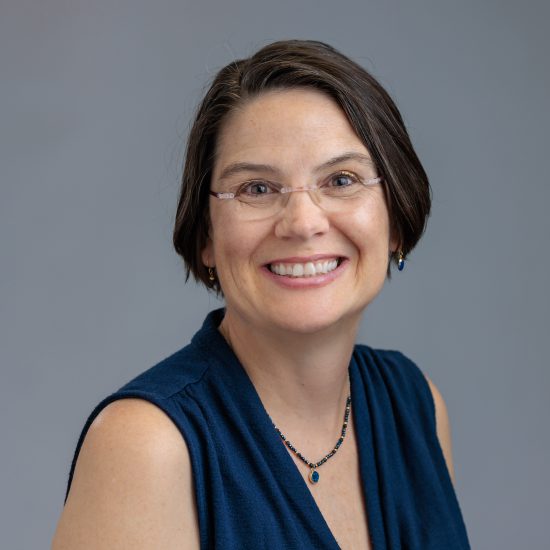
Ariel Kalil

Daniel Levin Professor
University of Chicago Harris School of Public Policy
Phone: (773) 834-2090

Ariel Kalil is the Daniel Levin Professor at the University of Chicago Harris School of Public Policy, where she directs the Center for Human Potential and Public Policy and co-directs the Behavioral Insights and Parenting Lab. She is a developmental psychologist who studies economic conditions, parenting, and child development. She has held visiting appointments at the University of Stavanger School of Business and Law and at NHH the Norwegian School of Economics. She is currently an Associate Investigator at the Australian Research Council Centre of Excellence for Children and Families Over the Life Course. At the Behavioral Insights and Parenting Lab, she draws on insights from behavioral economics and neuroscience to design and experimentally test technology-based interventions to strengthen parental engagement and child skill development in low-income families.

Kalil received her PhD in developmental psychology from the University of Michigan. Before joining the Harris faculty in 1999, she completed a postdoctoral fellowship at the University of Michigan’s National Poverty Center. Kalil has received the William T. Grant Foundation Faculty Scholars Award, the Changing Faces of America’s Children Young Scholars Award from the Foundation for Child Development, the National Academy of Education/Spencer Postdoctoral Fellowship, and in 2003 she was the first-ever recipient of the Society for Research in Child Development (SRCD) Award for Early Research Contributions. Her work has been funded by NIH, NSF, and by a number of private foundations.

Ariel Kalil

Daniel Levin Professor
University of Chicago Harris School of Public Policy
(773) 834-2090

Ariel Kalil is the Daniel Levin Professor at the University of Chicago Harris School of Public Policy, where she directs the Center for Human Potential and Public Policy and co-directs the Behavioral Insights and Parenting Lab. She is a developmental psychologist who studies economic conditions, parenting, and child development. She has held visiting appointments at the University of Stavanger School of Business and Law and at NHH the Norwegian School of Economics. She is currently an Associate Investigator at the Australian Research Council Centre of Excellence for Children and Families Over the Life Course. At the Behavioral Insights and Parenting Lab, she draws on insights from behavioral economics and neuroscience to design and experimentally test technology-based interventions to strengthen parental engagement and child skill development in low-income families.

Kalil received her PhD in developmental psychology from the University of Michigan. Before joining the Harris faculty in 1999, she completed a postdoctoral fellowship at the University of Michigan’s National Poverty Center. Kalil has received the William T. Grant Foundation Faculty Scholars Award, the Changing Faces of America’s Children Young Scholars Award from the Foundation for Child Development, the National Academy of Education/Spencer Postdoctoral Fellowship, and in 2003 she was the first-ever recipient of the Society for Research in Child Development (SRCD) Award for Early Research Contributions. Her work has been funded by NIH, NSF, and by a number of private foundations.

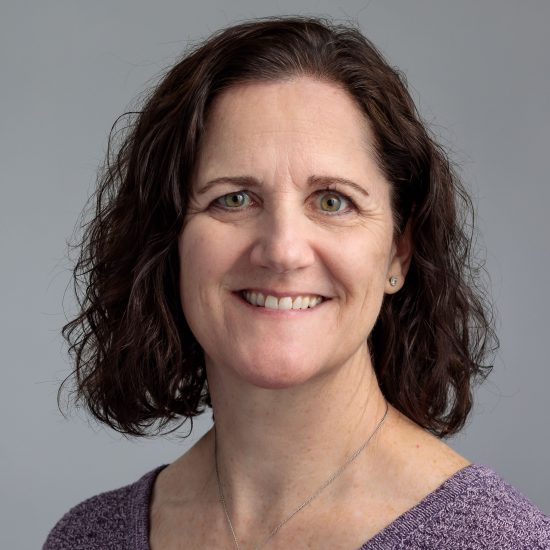
Bess Welch

Vice President
Public Health
Phone: (312) 759-4201

Bess manages and administers social science surveys for governmental agencies, academic institutions, and foundations. As vice president on the Public Health department, Bess also collaborates with department leadership to facilitate and direct department functions including recruitment and staffing, business development, and financial management.

With a doctorate in Applied Social Psychology, Bess has over 20 years of experience leading multidisciplinary teams in the design, development, and delivery of complex survey data and analytic products used by policy makers and researchers in the public health arenas.

Bess currently serves as the project director (PD) for the National Immunization Surveys (NIS). The NIS is the one of largest random-digit-dial telephone surveys, with more than 25 million yearly sampled telephone lines, providing ongoing surveillance of immunization coverage for children and teenagers in the U.S. As PD, she oversees all aspects of the NIS-Child, NIS-Teen, and NIS-Flu surveys, as well as any additional Task Orders awarded under the NIS IDIQ. This includes working with the Centers for Disease Control and Prevention (CDC) to refine research objectives and design options, developing cost estimates, directing the development of survey instrumentation, supervising data collection activities, managing data review and other quality checks, and ensuring that cleaned and weighted data are delivered to the CDC. Bess has also served as project director for other large and small survey projects including telephone, web, and mixed-mode surveys.

Prior to joining NORC, Bess worked at other survey and market research organizations, conducting in-depth telephone and in-person individual and group interviews, analyzing qualitative and quantitative data, and preparing comprehensive reports of findings as well as conclusions and recommendations. She additionally served as a part-time instructor for Loyola’s Psychology Department where she taught Statistics, Social Psychology, Research Methods, and Laboratory in Social Psychology.

Bess Welch

Vice President
Public Health
(312) 759-4201

Bess manages and administers social science surveys for governmental agencies, academic institutions, and foundations. As vice president on the Public Health department, Bess also collaborates with department leadership to facilitate and direct department functions including recruitment and staffing, business development, and financial management.

With a doctorate in Applied Social Psychology, Bess has over 20 years of experience leading multidisciplinary teams in the design, development, and delivery of complex survey data and analytic products used by policy makers and researchers in the public health arenas.

Bess currently serves as the project director (PD) for the National Immunization Surveys (NIS). The NIS is the one of largest random-digit-dial telephone surveys, with more than 25 million yearly sampled telephone lines, providing ongoing surveillance of immunization coverage for children and teenagers in the U.S. As PD, she oversees all aspects of the NIS-Child, NIS-Teen, and NIS-Flu surveys, as well as any additional Task Orders awarded under the NIS IDIQ. This includes working with the Centers for Disease Control and Prevention (CDC) to refine research objectives and design options, developing cost estimates, directing the development of survey instrumentation, supervising data collection activities, managing data review and other quality checks, and ensuring that cleaned and weighted data are delivered to the CDC. Bess has also served as project director for other large and small survey projects including telephone, web, and mixed-mode surveys.

Prior to joining NORC, Bess worked at other survey and market research organizations, conducting in-depth telephone and in-person individual and group interviews, analyzing qualitative and quantitative data, and preparing comprehensive reports of findings as well as conclusions and recommendations. She additionally served as a part-time instructor for Loyola’s Psychology Department where she taught Statistics, Social Psychology, Research Methods, and Laboratory in Social Psychology.

Bruce D. Meyer

McCormick Foundation Professor
University of Chicago Harris School of Public Policy

Bruce D. Meyer, the McCormick Foundation Professor at the University of Chicago Harris School of Public Policy, studies poverty and inequality, tax policy, government safety net programs such as unemployment insurance, workers’ compensation, food stamps, and Medicaid, and the accuracy of household surveys. His most recent work includes research on trends in poverty and inequality, the consequences of disability, the effects of Medicaid, and the accuracy of household surveys.

Meyer received his BA and MA in economics from Northwestern University and his PhD in economics from the Massachusetts Institute of Technology. He has been at the University of Chicago since 2004. From 1987 to 2004, Meyer was a professor in the Economics Department at Northwestern University. He has also been a visiting professor at Harvard University, University College London, and Princeton University, a member of the Institute for Research on Poverty, a research associate at the National Bureau of Economic Research, and a faculty fellow at the Institute for Policy Research. He is a member of the National Academy of Social Insurance. Meyer has also served as an advisor to the U.S. Department of Labor, U.S. Bureau of Labor Statistics, New York State Office of Temporary and Disability Assistance, Human Resources Development Canada, Manpower Demonstration Research Corporation, and Mathematica Policy Research.

Bruce D. Meyer

McCormick Foundation Professor
University of Chicago Harris School of Public Policy

Bruce D. Meyer, the McCormick Foundation Professor at the University of Chicago Harris School of Public Policy, studies poverty and inequality, tax policy, government safety net programs such as unemployment insurance, workers’ compensation, food stamps, and Medicaid, and the accuracy of household surveys. His most recent work includes research on trends in poverty and inequality, the consequences of disability, the effects of Medicaid, and the accuracy of household surveys.

Meyer received his BA and MA in economics from Northwestern University and his PhD in economics from the Massachusetts Institute of Technology. He has been at the University of Chicago since 2004. From 1987 to 2004, Meyer was a professor in the Economics Department at Northwestern University. He has also been a visiting professor at Harvard University, University College London, and Princeton University, a member of the Institute for Research on Poverty, a research associate at the National Bureau of Economic Research, and a faculty fellow at the Institute for Policy Research. He is a member of the National Academy of Social Insurance. Meyer has also served as an advisor to the U.S. Department of Labor, U.S. Bureau of Labor Statistics, New York State Office of Temporary and Disability Assistance, Human Resources Development Canada, Manpower Demonstration Research Corporation, and Mathematica Policy Research.

Bruce G. Taylor

Senior Fellow
Public Health
Phone: (301) 634-9512

Bruce is a senior fellow with NORC at the University of Chicago in the Public Health department. He has over 29 years of experience in applied research, field experiments, and statistical analysis. His work includes multi-method approaches using nationally representative household panels; organizational surveys with service providers, jails, and law enforcement; and the collection of survey and biospecimen data. He has conducted studies on violence prevention, violent offenders, victimization, policing, substance use and stigma towards substance use. His work has focused on identifying demographic and contextual explanations for a variety of forms of violent and related risky behaviors. He has conducted research funded by a number of U.S. federal sources, such as the Department of Defense, Department of Education, Department of Health and Human Services, and Department of Justice. His research has also been supported by state and municipal sources, along with several foundations and other private sources.

At NORC, Bruce is the co-principal investigator (Co-PI) of two Department of Defense evaluation contracts: Innovations in Sexual Assault Preventions Pilot Program (ISAPPP) Evaluation and the Evaluation Training and Technical Assistance Center (ETAC). For the Centers for Disease Control and Prevention (CDC), he is the project director for a study on youth health and wellness issues and the PI for a grant on youth firearm violence perpetration using a nationally representative longitudinal design. For NIH, he is a Co-I for the Justice Justice-Community Opioid Innovation Network’s (JCOIN), Methodology Center (MAARC) analyzing the effectiveness of the JCOIN network of 11 clinical research centers testing the effectiveness of medicated assisted treatments for opioid use disorder. He was a Co-PI of the first comprehensive nationally representative longitudinal youth violence panel (STRiV) for eight years, a Co-PI of the Interpersonal Conflict and Resolution (iCOR) Study of young adults, and a Co-PI of the first national survey on victim service providers.

Prior to joining NORC, Bruce’s early work in violence research explored the psychological recovery process of sexual assault victims and explored the correlates of post-crime distress and social networks. In the mid to late 1990s, he implemented a five-year program of experimental longitudinal studies in New York City on the effects of a variety of interventions on the problem of intimate partner violence (IPV). This work was followed by randomized controlled trials (RCTs) on the effectiveness of batterer treatment programs for men in community and jail-based settings. Since 2005, with funding from three U.S. Department of Justice (USDOJ) grants and two contracts from the CDC, he conducted a series of field experiments on the effectiveness of primary prevention programs on IPV and sexual violence. Also, from 1998 to 2002, he was the deputy director of the Arrestee Drug Abuse Monitoring Program, a program within the U.S. Department of Justice’s National Institute of Justice.

Bruce G. Taylor

Senior Fellow
Public Health
(301) 634-9512

Bruce is a senior fellow with NORC at the University of Chicago in the Public Health department. He has over 29 years of experience in applied research, field experiments, and statistical analysis. His work includes multi-method approaches using nationally representative household panels; organizational surveys with service providers, jails, and law enforcement; and the collection of survey and biospecimen data. He has conducted studies on violence prevention, violent offenders, victimization, policing, substance use and stigma towards substance use. His work has focused on identifying demographic and contextual explanations for a variety of forms of violent and related risky behaviors. He has conducted research funded by a number of U.S. federal sources, such as the Department of Defense, Department of Education, Department of Health and Human Services, and Department of Justice. His research has also been supported by state and municipal sources, along with several foundations and other private sources.

At NORC, Bruce is the co-principal investigator (Co-PI) of two Department of Defense evaluation contracts: Innovations in Sexual Assault Preventions Pilot Program (ISAPPP) Evaluation and the Evaluation Training and Technical Assistance Center (ETAC). For the Centers for Disease Control and Prevention (CDC), he is the project director for a study on youth health and wellness issues and the PI for a grant on youth firearm violence perpetration using a nationally representative longitudinal design. For NIH, he is a Co-I for the Justice Justice-Community Opioid Innovation Network’s (JCOIN), Methodology Center (MAARC) analyzing the effectiveness of the JCOIN network of 11 clinical research centers testing the effectiveness of medicated assisted treatments for opioid use disorder. He was a Co-PI of the first comprehensive nationally representative longitudinal youth violence panel (STRiV) for eight years, a Co-PI of the Interpersonal Conflict and Resolution (iCOR) Study of young adults, and a Co-PI of the first national survey on victim service providers.

Prior to joining NORC, Bruce’s early work in violence research explored the psychological recovery process of sexual assault victims and explored the correlates of post-crime distress and social networks. In the mid to late 1990s, he implemented a five-year program of experimental longitudinal studies in New York City on the effects of a variety of interventions on the problem of intimate partner violence (IPV). This work was followed by randomized controlled trials (RCTs) on the effectiveness of batterer treatment programs for men in community and jail-based settings. Since 2005, with funding from three U.S. Department of Justice (USDOJ) grants and two contracts from the CDC, he conducted a series of field experiments on the effectiveness of primary prevention programs on IPV and sexual violence. Also, from 1998 to 2002, he was the deputy director of the Arrestee Drug Abuse Monitoring Program, a program within the U.S. Department of Justice’s National Institute of Justice.

Caitlin Carroll Oppenheimer

Senior Vice President
Public Health
Phone: (301) 634-9322

Caitlin is a public health researcher with more than 25 years of experience conducting evaluation research and programmatic support to federal and non-federal clients. As the head of NORC’s Public Health research department, Caitlin oversees a multidisciplinary staff of more than 100 professionals executing more than 80 research projects annually. The Public Health department leads some of NORC’s largest telephone-based data collection efforts, including innovative work to adapt NORC’s survey research procedures to support contact tracing for COVID-19. The department also has a large research portfolio of projects using qualitative and secondary data as well as social listening to provide rigorous and practical solutions for clients. Caitlin leads the department’s strategic direction, including talent acquisition, organizational partnering, and development of new solutions. Under her leadership, the department has diversified its research expertise, including enhanced capabilities in health communications and the use of digital media for research and behavior change.

Caitlin has expertise in meeting facilitation, strategic visioning, and evaluation research, including qualitative data collection, establishment surveys, and evaluation of program data. In her tenure at NORC, Caitlin has directed more than 15 projects for clients such as the HHS Office of Disease Prevention and Health Promotion, the HHS Office on Women’s Health, the HHS Office of Minority Health, the Centers for Medicare & Medicaid Services, the Agency for Healthcare Research and Quality, and the Centers for Disease Prevention and Promotion’s National Center for Chronic Disease Prevention and Health Promotion.

Caitlin Carroll Oppenheimer

Senior Vice President
Public Health
(301) 634-9322

Caitlin is a public health researcher with more than 25 years of experience conducting evaluation research and programmatic support to federal and non-federal clients. As the head of NORC’s Public Health research department, Caitlin oversees a multidisciplinary staff of more than 100 professionals executing more than 80 research projects annually. The Public Health department leads some of NORC’s largest telephone-based data collection efforts, including innovative work to adapt NORC’s survey research procedures to support contact tracing for COVID-19. The department also has a large research portfolio of projects using qualitative and secondary data as well as social listening to provide rigorous and practical solutions for clients. Caitlin leads the department’s strategic direction, including talent acquisition, organizational partnering, and development of new solutions. Under her leadership, the department has diversified its research expertise, including enhanced capabilities in health communications and the use of digital media for research and behavior change.

Caitlin has expertise in meeting facilitation, strategic visioning, and evaluation research, including qualitative data collection, establishment surveys, and evaluation of program data. In her tenure at NORC, Caitlin has directed more than 15 projects for clients such as the HHS Office of Disease Prevention and Health Promotion, the HHS Office on Women’s Health, the HHS Office of Minority Health, the Centers for Medicare & Medicaid Services, the Agency for Healthcare Research and Quality, and the Centers for Disease Prevention and Promotion’s National Center for Chronic Disease Prevention and Health Promotion.