Filter By:

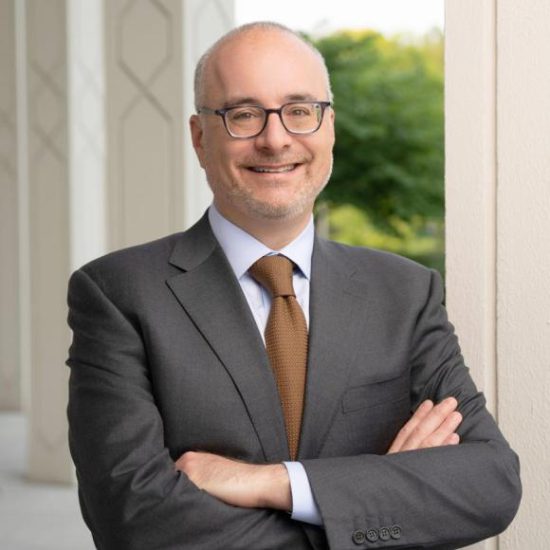
David Nirenberg

Dean, Divinity School; Faculty Member, Greenberg Center for Jewish Studies; Faculty Member, Medieval Studies; Faculty Member, Renaissance Studies
University of Chicago Divinity School
Phone: (773) 702-3423

Much of my work has focused on the ways in which Jewish, Christian, and Islamic cultures constitute themselves by interrelating with or thinking about each other. My first book, Communities of Violence: Persecution of Minorities in the Middle Ages, studied social interaction between the three groups within the context of Spain and France in order to understand the role of violence in shaping the possibilities for coexistence. In later projects I explored the work that “Judaism,” “Christianity,” and “Islam” do as figures in each other’s thought. One product of that approach, focused on art history, was (jointly with Herb Kessler) Judaism and Christian Art: Aesthetic Anxieties from the Catacombs to Colonialism (2011). In Anti-Judaism: The Western Tradition (2013), I attempted to apply the methodology to a very longue durée, studying the work done by pagan, Christian, Muslim, and secular thinking about Jews and Judaism in the history of ideas. More or less simultaneously in Neighboring Faiths: Christianity, Islam, and Judaism Medieval and Modern (2014), I tried to bring the social into conversation with the hermeneutic, in order to show how, in multireligious societies, interactions between lived experiences and conceptual categories shape how adherents of all three religions perceive themselves and each other. Then in Aesthetic Theology and Its Enemies: Judaism in Christian Painting, Poetry, and Politics (2015), I focused on how thinking about Judaism shaped the ways in which Christian cultures could imagine the possibilities and limits of community and communication.

David Nirenberg

Dean, Divinity School; Faculty Member, Greenberg Center for Jewish Studies; Faculty Member, Medieval Studies; Faculty Member, Renaissance Studies
University of Chicago Divinity School
(773) 702-3423

Much of my work has focused on the ways in which Jewish, Christian, and Islamic cultures constitute themselves by interrelating with or thinking about each other. My first book, Communities of Violence: Persecution of Minorities in the Middle Ages, studied social interaction between the three groups within the context of Spain and France in order to understand the role of violence in shaping the possibilities for coexistence. In later projects I explored the work that “Judaism,” “Christianity,” and “Islam” do as figures in each other’s thought. One product of that approach, focused on art history, was (jointly with Herb Kessler) Judaism and Christian Art: Aesthetic Anxieties from the Catacombs to Colonialism (2011). In Anti-Judaism: The Western Tradition (2013), I attempted to apply the methodology to a very longue durée, studying the work done by pagan, Christian, Muslim, and secular thinking about Jews and Judaism in the history of ideas. More or less simultaneously in Neighboring Faiths: Christianity, Islam, and Judaism Medieval and Modern (2014), I tried to bring the social into conversation with the hermeneutic, in order to show how, in multireligious societies, interactions between lived experiences and conceptual categories shape how adherents of all three religions perceive themselves and each other. Then in Aesthetic Theology and Its Enemies: Judaism in Christian Painting, Poetry, and Politics (2015), I focused on how thinking about Judaism shaped the ways in which Christian cultures could imagine the possibilities and limits of community and communication.

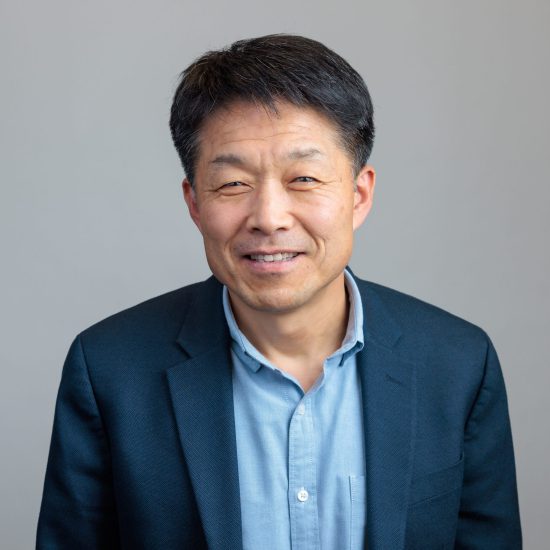
David Sterrett

Principal Research Scientist
NORC
Phone: (312) 357-7031

David is a principal research scientist in The Associated Press-NORC Center for Public Affairs Research. He has significant experience designing and managing complex multi-mode surveys and conducting research on survey methodology and public attitudes.

David led the methodological redesign of the 2022 National Survey of Fishing, Hunting, and Wildlife Associated Recreation and is the methodological lead for the 2027 National Survey. David is the project director for the 2026 National Recreational Boating Safety Survey for the U.S. Coast Guard and is leading a redesign of the survey methodology.

He helped develop the DASH study for the Advertising Research Foundation, and he is the project director for this study that provides benchmarks for how U.S. households connect to and consume TV and interact with and share streaming media.

David was the methodological lead for AP VoteCast from 2018 to 2024, and he helped design the novel approach to understanding the American electorate that combined a probability sample of registered voters with a large opt-in sample of registered voters.

He has also managed a number of projects featuring collaborations with researchers such as the UChicago Harris/AP-NORC Poll, the Media Insight Project with the American Press Institute, and the GenForward surveys for the Black Youth Project at the University of Chicago.

David has published scholarly work in multiple peer-reviewed journals and has expertise in synthesizing complex social science research so that it is easily accessible for journalists and the public. He frequently presents at academic and survey research conferences and is actively involved with both AAPOR and MAPOR.

Prior to joining NORC, he spent four years conducting survey research at the University of Illinois at Chicago and five years working as a journalist in Chicago and San Diego.

David Sterrett

Principal Research Scientist
NORC
(312) 357-7031

David is a principal research scientist in The Associated Press-NORC Center for Public Affairs Research. He has significant experience designing and managing complex multi-mode surveys and conducting research on survey methodology and public attitudes.

David led the methodological redesign of the 2022 National Survey of Fishing, Hunting, and Wildlife Associated Recreation and is the methodological lead for the 2027 National Survey. David is the project director for the 2026 National Recreational Boating Safety Survey for the U.S. Coast Guard and is leading a redesign of the survey methodology.

He helped develop the DASH study for the Advertising Research Foundation, and he is the project director for this study that provides benchmarks for how U.S. households connect to and consume TV and interact with and share streaming media.

David was the methodological lead for AP VoteCast from 2018 to 2024, and he helped design the novel approach to understanding the American electorate that combined a probability sample of registered voters with a large opt-in sample of registered voters.

He has also managed a number of projects featuring collaborations with researchers such as the UChicago Harris/AP-NORC Poll, the Media Insight Project with the American Press Institute, and the GenForward surveys for the Black Youth Project at the University of Chicago.

David has published scholarly work in multiple peer-reviewed journals and has expertise in synthesizing complex social science research so that it is easily accessible for journalists and the public. He frequently presents at academic and survey research conferences and is actively involved with both AAPOR and MAPOR.

Prior to joining NORC, he spent four years conducting survey research at the University of Illinois at Chicago and five years working as a journalist in Chicago and San Diego.

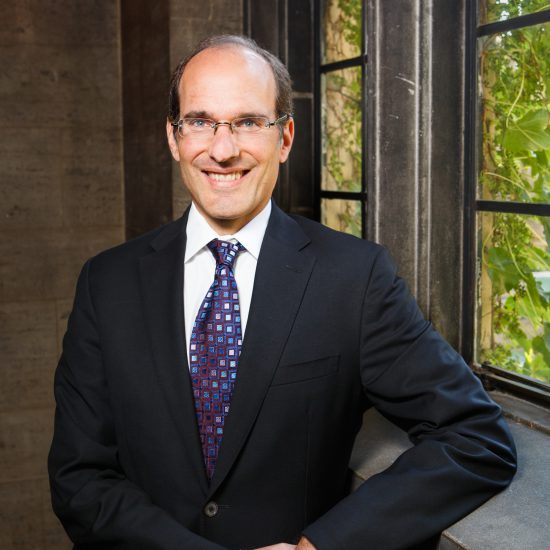
Don Jang

Vice President
Statistics & Data Science
Phone: (301) 634-9415

Don, an American Statistical Association fellow, has expertise in statistical and data science methods. Don has over 25 years of experience managing and directing large-scale national federal statistical projects and methodological research associated with federal statistics programs. Don leads a group of statisticians and data scientists with expertise in design and analytic techniques necessary for social science research. He helped his team establish roles in complex sample designs, experimental and observational study designs, data collection and processing, and statistical inference. In the wake of big data and data analytics, he led his group to augment their roles by expanding modern capabilities in data analytics, advanced statistical computing, Bayesian modeling, data mining, and machine learning. As research embraces more timely and cost-efficient data to include newer research methodologies, such as data analytics and rapid-cycle evaluation, so have the services and resources offered by the Data Science group he leads. His vision to bring data scientific and statistical values to evidence-based social science research and informed decision-making has continued to be realized under his leadership. Through seamless integration with NORC’s research team, our Data Science group can implement high-level, high-quality methodologies, providing a strong statistical framework for every research project.

Don’s longtime commitment to supporting the National Science Foundation’s NCSES programs dates back to his tenure at Mathematica. Don has led all statistical tasks for the Scientists and Engineers Statistical Data System (SESTAT) project since 1996. The SESTAT database integrates data collected through three national sample surveys supported by the National Science Foundation (NSF): the National Survey of College Graduates (NSCG), the Survey of Doctorate Recipients (SDR), and the National Survey of Recent College Graduates (NSRCG). For that project, Don has led all activities needed for statistical support of the SESTAT system, including linking multiple survey data; optimum sample allocation to meet several statistical precision goals; dynamic, streamlined, real-time data processing for data editing, imputation, and model-based weighting production for large scale data collection, developing SESTAT variance estimation methodologies, constructing longitudinal weights for longitudinal data analysis, and providing general statistical consultations to NSF and data collection contractors.

Don led the Agency for Healthcare Research and Quality (AHRQ)’s data innovation projects to help create new data products that fill crucial data gaps and inform health care policy and research to address the nation’s emerging health issues. Data products include Synthetic Healthcare Database for Research (SyH-DR), Social Determinants of Health Research Database (SDOH-RD), and Physician and Physician Research Database (3P-RD).

Don is a Fellow of the American Statistical Association, an Elected Member of the International Statistical Institute, and the current Chair of the Survey Research Methods Section of the American Statistical Association for the 2024 term. He served on the ASA board of directors from 2018 to 2020. He also served as President of the Korean International Statistical Society from 2019 to 2020. He was a board member of Hope Nicaragua from 2007 to 2018.

Don Jang

Vice President
Statistics & Data Science
(301) 634-9415

Don, an American Statistical Association fellow, has expertise in statistical and data science methods. Don has over 25 years of experience managing and directing large-scale national federal statistical projects and methodological research associated with federal statistics programs. Don leads a group of statisticians and data scientists with expertise in design and analytic techniques necessary for social science research. He helped his team establish roles in complex sample designs, experimental and observational study designs, data collection and processing, and statistical inference. In the wake of big data and data analytics, he led his group to augment their roles by expanding modern capabilities in data analytics, advanced statistical computing, Bayesian modeling, data mining, and machine learning. As research embraces more timely and cost-efficient data to include newer research methodologies, such as data analytics and rapid-cycle evaluation, so have the services and resources offered by the Data Science group he leads. His vision to bring data scientific and statistical values to evidence-based social science research and informed decision-making has continued to be realized under his leadership. Through seamless integration with NORC’s research team, our Data Science group can implement high-level, high-quality methodologies, providing a strong statistical framework for every research project.

Don’s longtime commitment to supporting the National Science Foundation’s NCSES programs dates back to his tenure at Mathematica. Don has led all statistical tasks for the Scientists and Engineers Statistical Data System (SESTAT) project since 1996. The SESTAT database integrates data collected through three national sample surveys supported by the National Science Foundation (NSF): the National Survey of College Graduates (NSCG), the Survey of Doctorate Recipients (SDR), and the National Survey of Recent College Graduates (NSRCG). For that project, Don has led all activities needed for statistical support of the SESTAT system, including linking multiple survey data; optimum sample allocation to meet several statistical precision goals; dynamic, streamlined, real-time data processing for data editing, imputation, and model-based weighting production for large scale data collection, developing SESTAT variance estimation methodologies, constructing longitudinal weights for longitudinal data analysis, and providing general statistical consultations to NSF and data collection contractors.

Don led the Agency for Healthcare Research and Quality (AHRQ)’s data innovation projects to help create new data products that fill crucial data gaps and inform health care policy and research to address the nation’s emerging health issues. Data products include Synthetic Healthcare Database for Research (SyH-DR), Social Determinants of Health Research Database (SDOH-RD), and Physician and Physician Research Database (3P-RD).

Don is a Fellow of the American Statistical Association, an Elected Member of the International Statistical Institute, and the current Chair of the Survey Research Methods Section of the American Statistical Association for the 2024 term. He served on the ASA board of directors from 2018 to 2020. He also served as President of the Korean International Statistical Society from 2019 to 2020. He was a board member of Hope Nicaragua from 2007 to 2018.
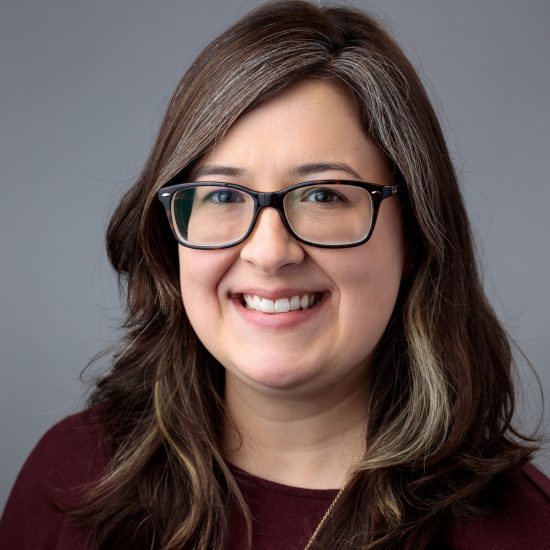
Emily Alvarez

Deputy Director
AP-NORC
Phone: (312) 802-5653

Emily is a senior research scientist and deputy director of the AP-NORC Center for Public Affairs Research. She has more than a decade of experience in measuring public opinion on a broad range of topics including environmental and energy policy, parenting and education, trust in government, and elections. She has a particular interest in distilling complex research findings for dissemination to stakeholders, journalists, and the broader public. She also serves as a member of NORC’s Institutional Review Board.

Emily holds a MA in Political Science from Northwestern University.

Emily Alvarez

Deputy Director
AP-NORC
(312) 802-5653

Emily is a senior research scientist and deputy director of the AP-NORC Center for Public Affairs Research. She has more than a decade of experience in measuring public opinion on a broad range of topics including environmental and energy policy, parenting and education, trust in government, and elections. She has a particular interest in distilling complex research findings for dissemination to stakeholders, journalists, and the broader public. She also serves as a member of NORC’s Institutional Review Board.

Emily holds a MA in Political Science from Northwestern University.

Ethan Bueno de Mesquita

Dean and Sydney Stein Professor
University of Chicago Harris School of Public Policy

Ethan Bueno de Mesquita is the Dean and Sydney Stein Professor at the University of Chicago Harris School of Public Policy, and a Faculty Associate in the University of Chicago Department of Political Science.

A leading political scientist whose research applies game theoretic models to the study of conflict, political violence, national security, and electoral politics, he has also written extensively on methodological issues in the social sciences. He writes and advises leaders in the public and private sectors on both national security matters and issues at the intersection of technology and society.

Prior to assuming the role of dean in 2025, Ethan served as Interim Dean and Deputy Dean of the Harris School since 2011, as chair of the Pearson Institute Advisory Council, and as co-chair of Harris’ Diversity and Inclusion Advisory Board. He is a member of the board of directors of the Empirical Studies of Conflict Project. Additionally, he served on the steering committee responsible for establishing the PhD in Political Economy and was a member of the Obama Presidential Center Faculty Partnership Advisory Committee.

He is the author or co-author of Political Economy for Public Policy, Theory and Credibility, and Thinking Clearly with Data (all from Princeton University Press) as well as many articles in both political science and economics. He has also written for outlets such as Foreign Policy, the Boston Review, the Harvard Business Review, War on the Rocks, the Chicago Tribune, the National Interest, and others. His research has been supported by the National Science Foundation, the Office of Naval Research, and the United States Institute of Peace.

Before joining the University of Chicago faculty in 2007, Ethan was a faculty member in the political science department at Washington University in St. Louis and was a Lady Davis Fellow and visiting faculty member at the Hebrew University of Jerusalem’s Center for the Study of Rationality and Department of Political Science. Ethan is an alumnus of the University of Chicago, AB’96, and earned his MA (2000) and PhD (2003) in political science from Harvard University.

Ethan Bueno de Mesquita

Dean and Sydney Stein Professor
University of Chicago Harris School of Public Policy

Ethan Bueno de Mesquita is the Dean and Sydney Stein Professor at the University of Chicago Harris School of Public Policy, and a Faculty Associate in the University of Chicago Department of Political Science.

A leading political scientist whose research applies game theoretic models to the study of conflict, political violence, national security, and electoral politics, he has also written extensively on methodological issues in the social sciences. He writes and advises leaders in the public and private sectors on both national security matters and issues at the intersection of technology and society.

Prior to assuming the role of dean in 2025, Ethan served as Interim Dean and Deputy Dean of the Harris School since 2011, as chair of the Pearson Institute Advisory Council, and as co-chair of Harris’ Diversity and Inclusion Advisory Board. He is a member of the board of directors of the Empirical Studies of Conflict Project. Additionally, he served on the steering committee responsible for establishing the PhD in Political Economy and was a member of the Obama Presidential Center Faculty Partnership Advisory Committee.

He is the author or co-author of Political Economy for Public Policy, Theory and Credibility, and Thinking Clearly with Data (all from Princeton University Press) as well as many articles in both political science and economics. He has also written for outlets such as Foreign Policy, the Boston Review, the Harvard Business Review, War on the Rocks, the Chicago Tribune, the National Interest, and others. His research has been supported by the National Science Foundation, the Office of Naval Research, and the United States Institute of Peace.

Before joining the University of Chicago faculty in 2007, Ethan was a faculty member in the political science department at Washington University in St. Louis and was a Lady Davis Fellow and visiting faculty member at the Hebrew University of Jerusalem’s Center for the Study of Rationality and Department of Political Science. Ethan is an alumnus of the University of Chicago, AB’96, and earned his MA (2000) and PhD (2003) in political science from Harvard University.